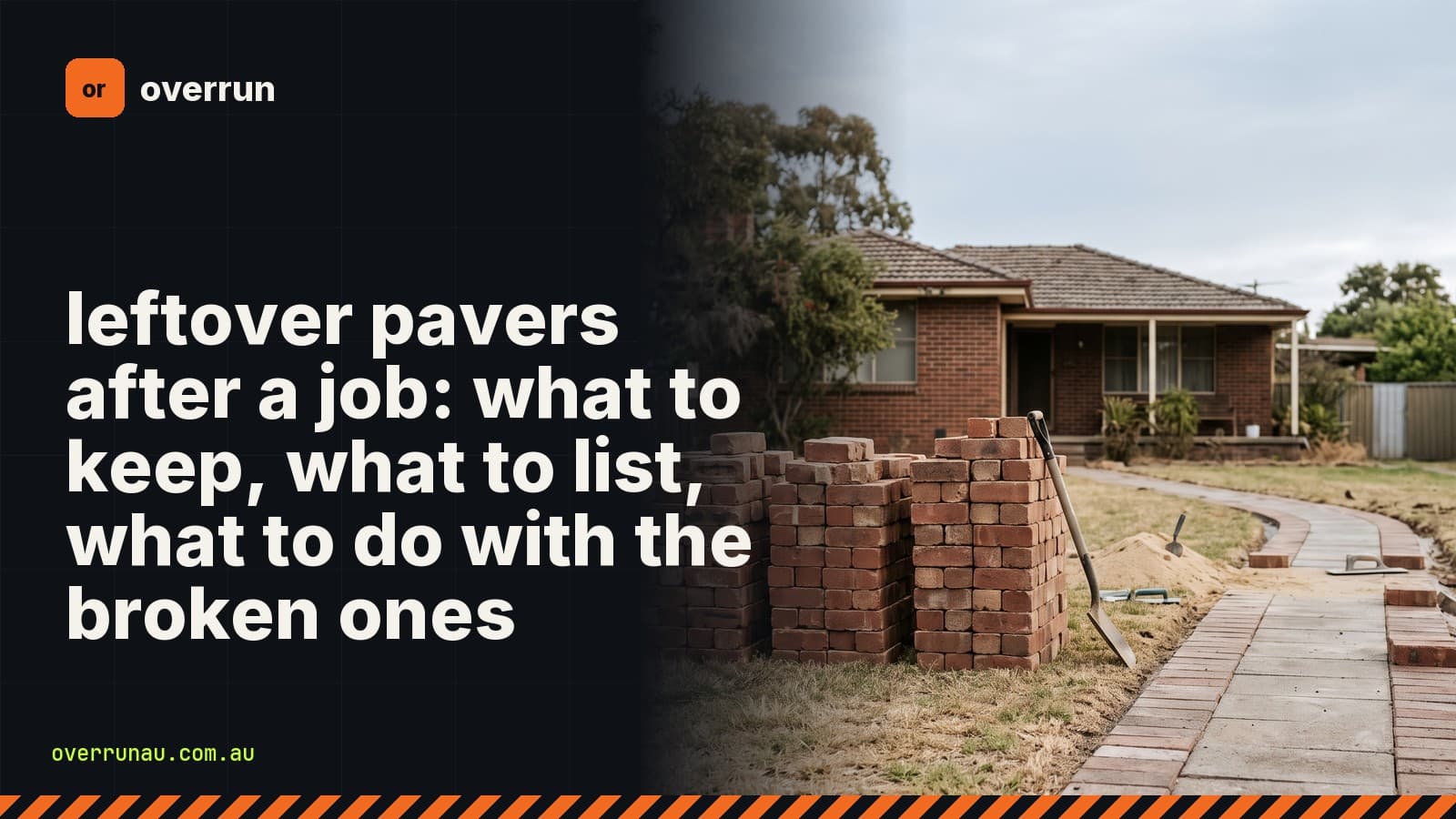
Spring is when the outdoor jobs happen. Patios, paths, pool surrounds, the bit beside the shed that's been dirt for three years. And at the end of most of them there's a stack of pavers left on the driveway that nobody planned for.
Pavers are a funny one. They're heavy and slow to move, and they last forever. That means they don't go off sitting in the yard, but it also means they sit in the yard for a very long time. My husband is on the tools and I've seen the same half pallet move from one side of our place to the other more than once.
Here's how I'd think about it.
Keep a few for repairs first
Before you do anything else, put some aside for the job you just finished. Pavers crack, a tree root lifts a section, someone drops something heavy. When that happens you want the exact same paver, and the easiest place to get it is your own stack.
Colours can vary between production runs, so a paver bought later might not match even if it's the same name on the brochure. If you're a tradie, leave a few with the client and tell them why. If it's your own place, keep them somewhere you'll remember.
A handful is enough for most jobs. The rest is fair game.
Store what's left properly
If you're holding on to pavers for a while, a few things keep them in good nick:
- Keep them on the pallet if you can. It keeps them off the dirt and makes them much easier to move or load later.
- Stack them flat and even. Leaning stacks fall over and chip edges, and chipped pavers are harder to use and harder to sell.
- Keep the packaging or a photo of it. The brand, colour name and size are what someone needs to know if they're trying to match an existing area.
- Keep them clear of mud and garden beds. Pavers that have sat in soil for a season need a clean before anyone wants them.
The broken and cut pieces
Every paving job leaves cuts and a few broken ones. Some of that is genuinely rubbish. A lot of it isn't.
Cut pieces and halves are handy for:
- garden bed edging
- stepping stones through a garden or along a side path
- packing under a water tank stand or a bin pad
- filling in small awkward gaps on another job
If you've got a decent pile of halves and cuts in the same colour, someone doing a small garden job might happily take them. Clean concrete and clay pieces that really are past it can often go to a recycler rather than general waste, so check what your local transfer station or recycler takes before you pay to put them in a skip.
Part pallets and over-orders are worth listing
This is where the money is. Over-ordering pavers is normal. You allow for cuts and breakage, the area comes in a bit smaller than drawn, or the client changes the design halfway through. You end up with full rows still strapped and maybe a part pallet that was never opened.
Someone out there needs exactly that. A renovator matching an old patio. An owner-builder finishing a path who's a row short. A tradie who needs a small quantity for a step and doesn't want to buy a full pallet. Your leftovers are someone's order.
It's worth asking your supplier first whether they'll take unopened pallets back. Policies vary and some will, often with conditions. If they won't, or the pallet's been opened, that's when it's worth listing.
How to list pavers so they sell
Pavers are heavy and buyers need to plan pickup, so the more detail you give up front, the fewer back-and-forth messages you'll get.
- Photos in daylight, one of the whole stack and one close up of a single paver so the colour and texture are clear.
- Brand, colour name and size if you know them. Snap the label or the docket.
- Quantity. Count them, or count rows and multiply. "About a pallet" makes buyers nervous.
- Condition. Unopened, opened but unused, or mixed with a few chips.
- Pickup details. Say if they're on a pallet, whether a forklift or tray is needed, and whether you can deliver.
- Your suburb, so buyers know if it's a realistic drive.
On Overrun you can list it in about a minute from your phone. The buyer pays you directly, you sort pickup or delivery between you, and we don't take any commission on the sale. If you're a tradie, the Tradie plan is free for the first 3 months with code 3FREETRADIE, then $19 a month.
If you're the one after pavers
If you're trying to match an existing area or you just need a few rows, tell us on the want list at overrunau.com.au. It's free and you don't need an account. We'll email you when a match is listed.
A note from me
Overrun is new. It launched in August and I run it alongside a full-time job, so I'm not going to pretend we've got a paver listed in every suburb yet. What I can tell you is that every listing makes it more useful for the next person, and a part pallet on a driveway is exactly the kind of thing it was built for.
If you've got pavers sitting around after a spring job, take two photos and list your overrun.
Quick answers
How many leftover pavers should I keep? Keep a handful from the same batch for future repairs, enough to replace a few cracked ones. The rest can go.
Can I return unused pavers to the supplier? Some suppliers take back unopened pallets, often with conditions. Ask them first. If they won't, list them.
What can I do with broken pavers? Use cuts and halves for garden edging, stepping stones or packing. Check with your local recycler or transfer station before skipping clean concrete or clay pieces.